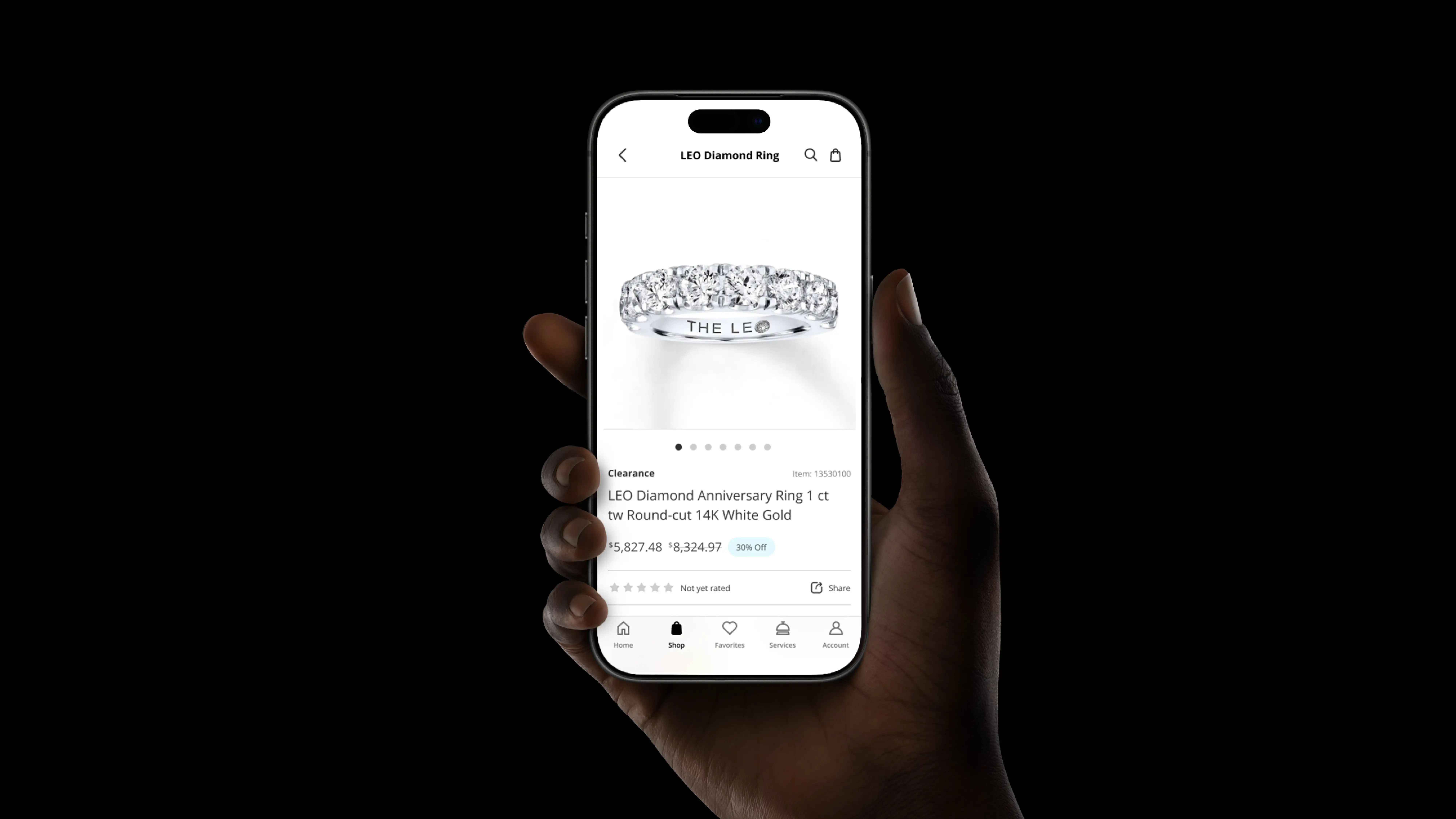
Signet Enterprise Platform
One iOS foundation for eight jewelry brands, built on the Amor design system.
I led the architecture for a shared mobile foundation, bringing common journeys, components, and interaction patterns to eight brands without flattening their identities.
The Challenge
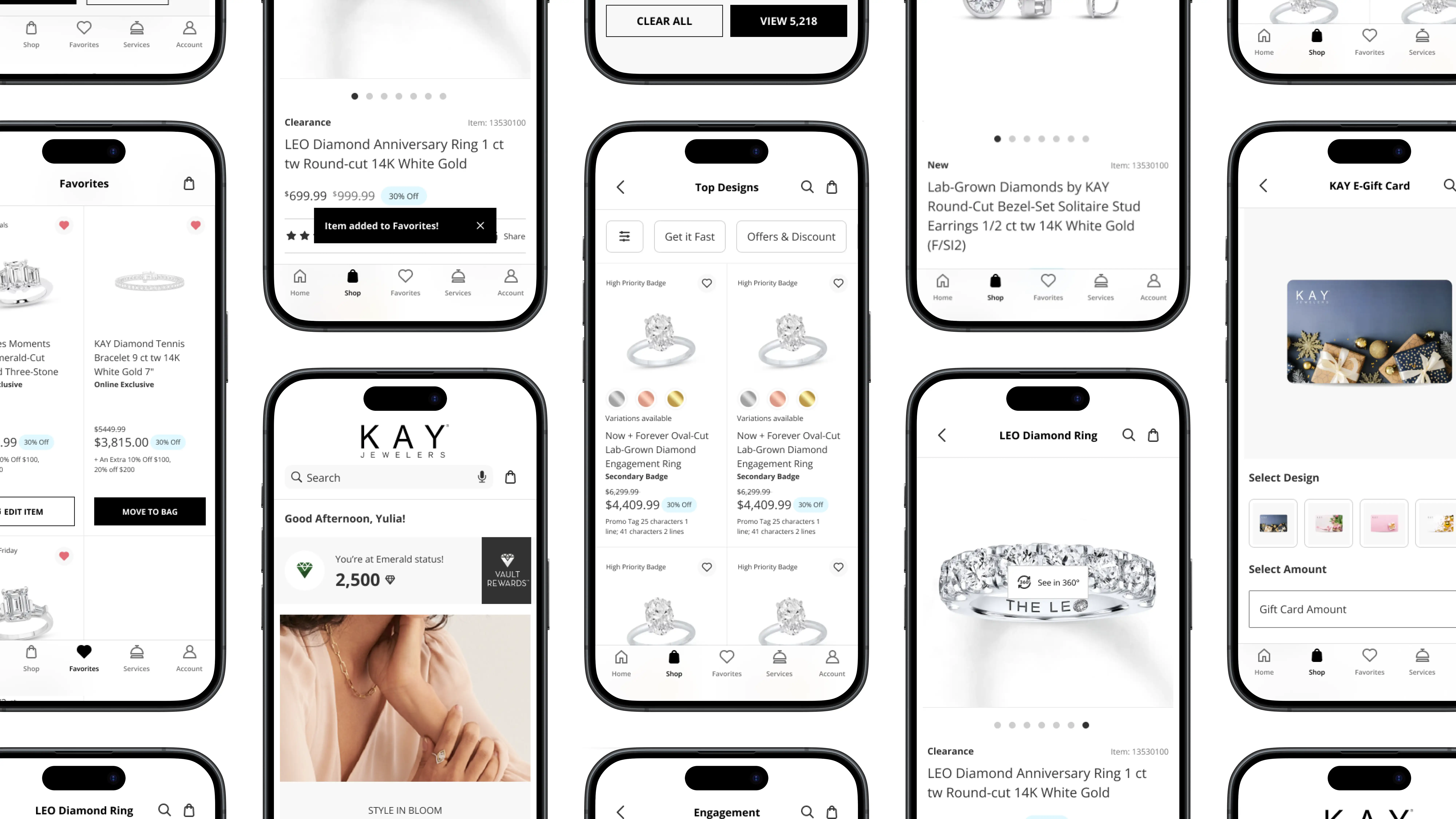
At this scale, small inconsistencies compound. Without a shared foundation, teams rebuilt core journeys independently, creating duplicate effort, uneven experiences, and friction from discovery to purchase.
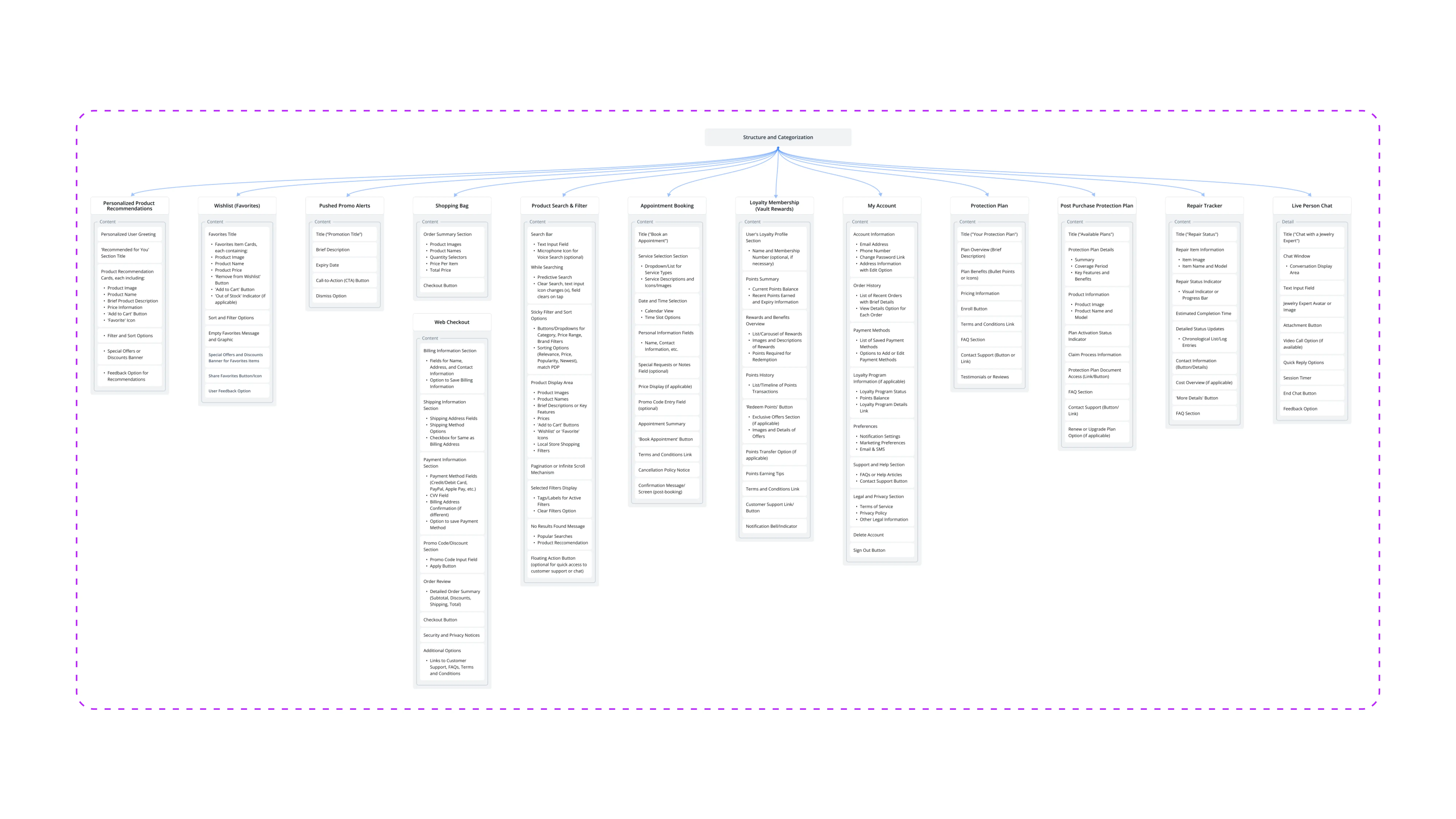
The unified architecture, consolidating fragmented navigation models into one shared foundation.
One Core, Eight Brands
I established a shared iOS architecture with a governed core for high-impact journeys and a flexible layer for brand expression.
Core patterns: Navigation, sign-in, checkout, and account flows were designed once, improved centrally, and deployed across brands.
Brand expression: Semantic theming let each brand adapt its visual language without recreating the underlying experience.
Validated with Users
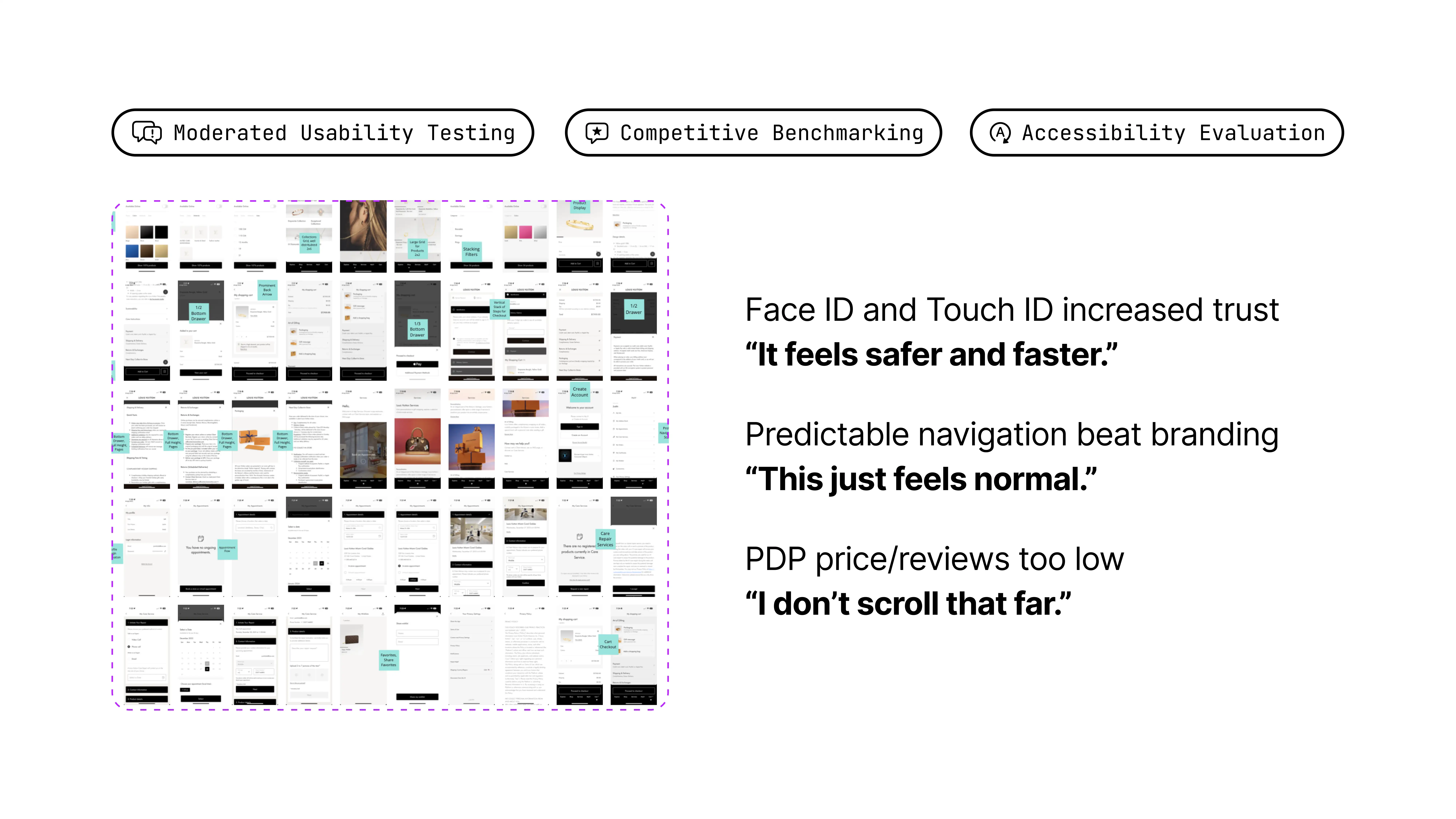
We tested the shared foundation through moderated studies, competitive benchmarking, and accessibility evaluation. Users consistently chose clarity, predictability, and trust over novelty.
Biometric sign-in: Made account access feel safer and faster.
Consistent navigation: Made shopping feel familiar across brands.
Content priority: Bringing price and reviews higher reduced effort at key decision points.
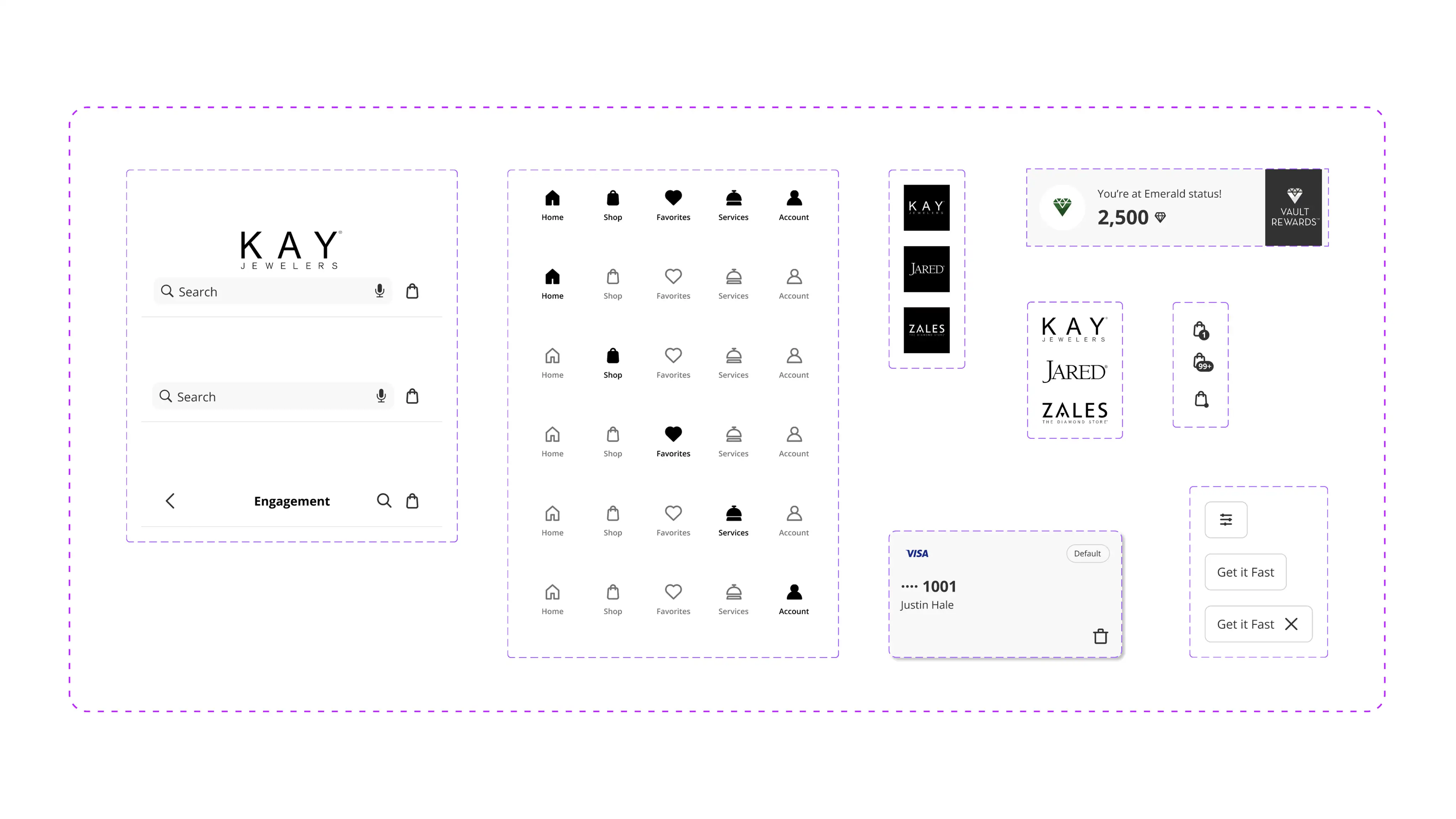
Amor Design System
Amor became the source of truth for the shared iOS platform, connecting design, engineering, and brand teams around reusable components, interaction
Faster delivery: Shared patterns and specs reduced duplicate work, improved handoff, and lowered regression risk.
Accessibility by default: Inclusive behavior was built into base components, not added later as a cleanup step.
Used by 800+ designers and engineers, with 40+ contributors across the portfolio.
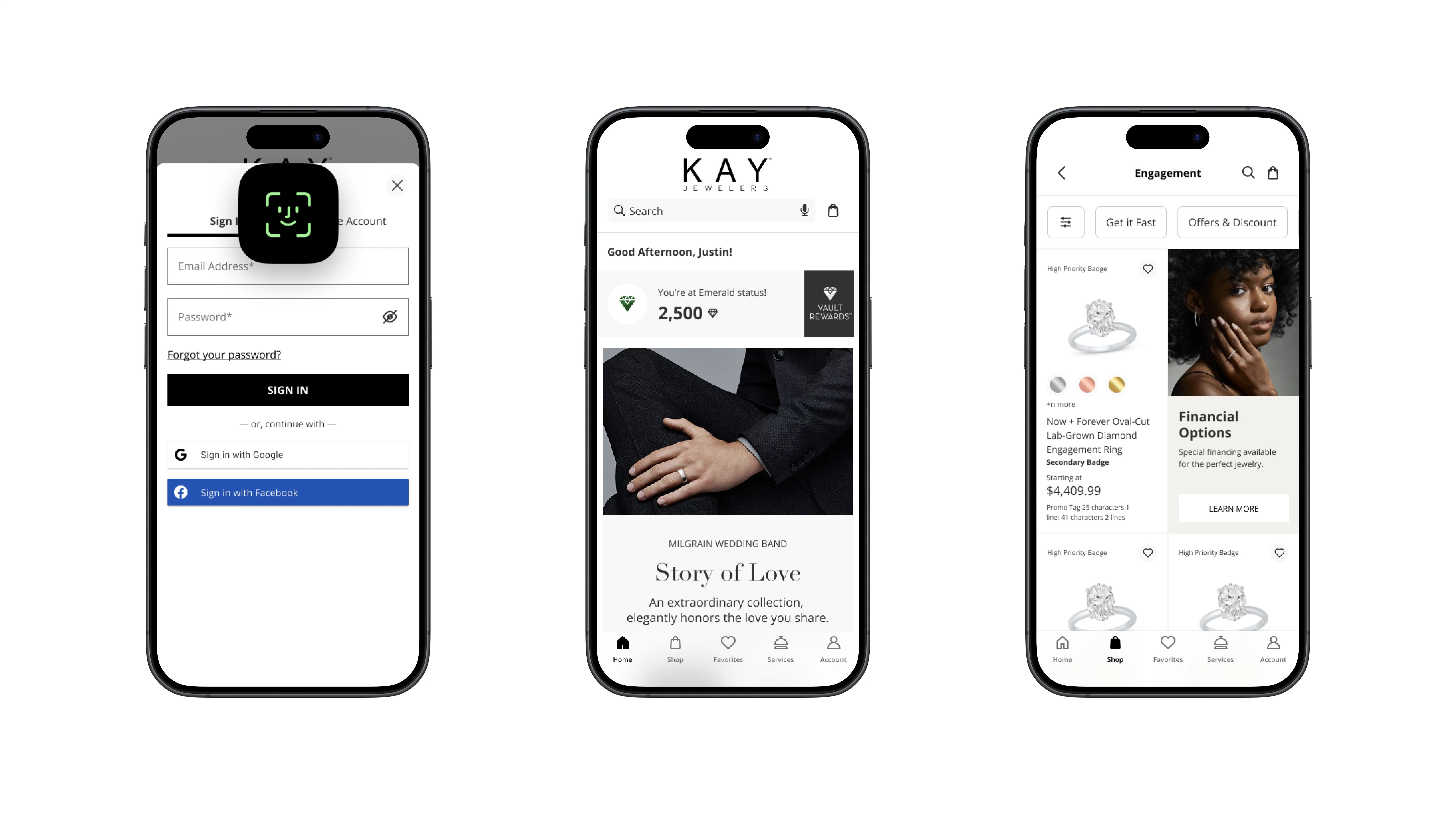
Unified Discovery
We replaced brand-specific navigation with a shared tab bar that created one familiar wayfinding system. Customers could move across brands without relearning core tasks.
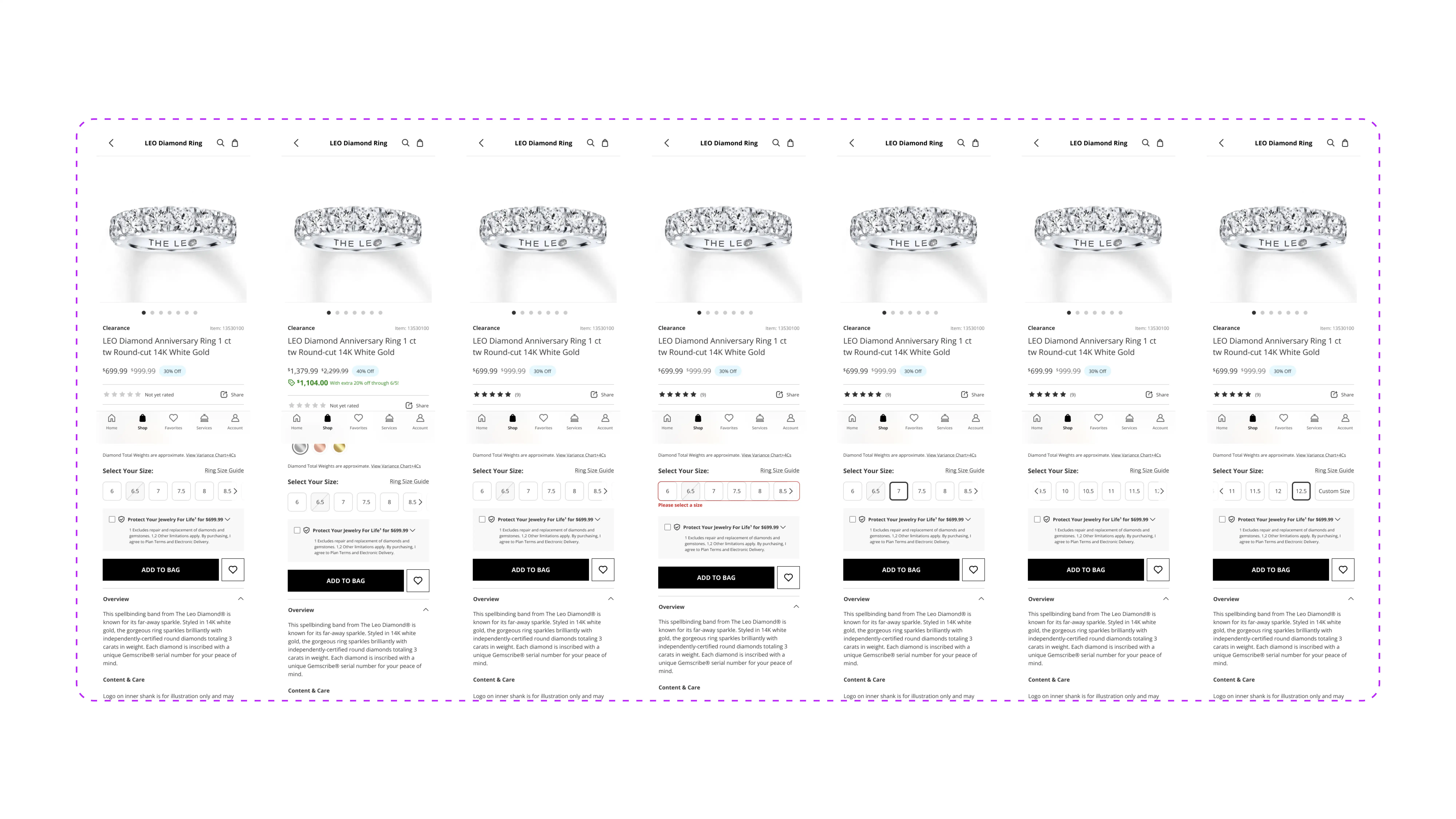
The Flexible Layer
A shared component model let the same product card adapt to each brand’s content density, merchandising priorities, and visual tone. The interaction pattern stayed consistent, while the expression stayed distinct.
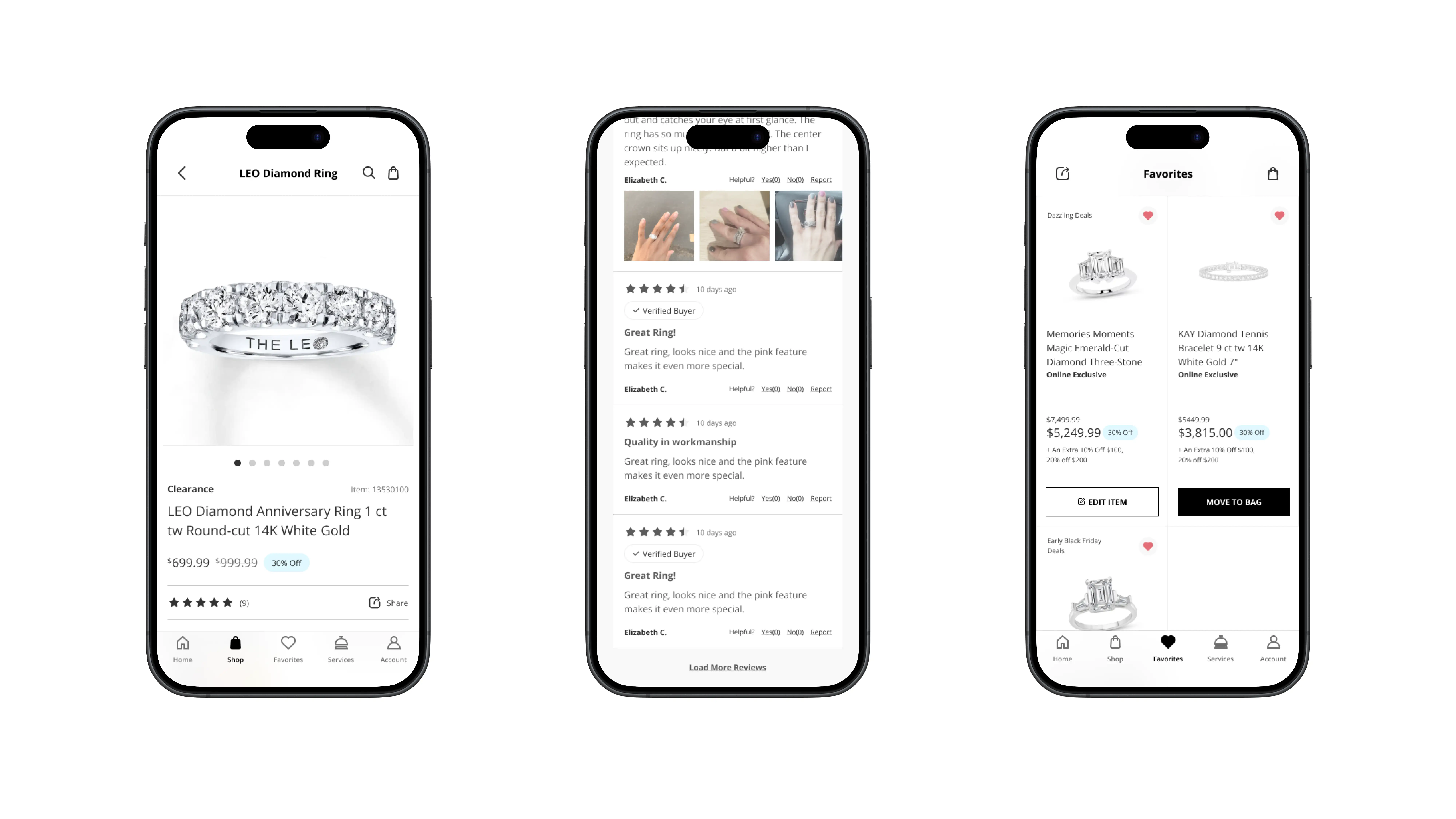
Conversion & Checkout
We standardized high-intent commerce patterns across product detail, reviews, favorites, and move to bag. Clearer hierarchy and consistent actions reduced friction and made purchasing easier to trust.
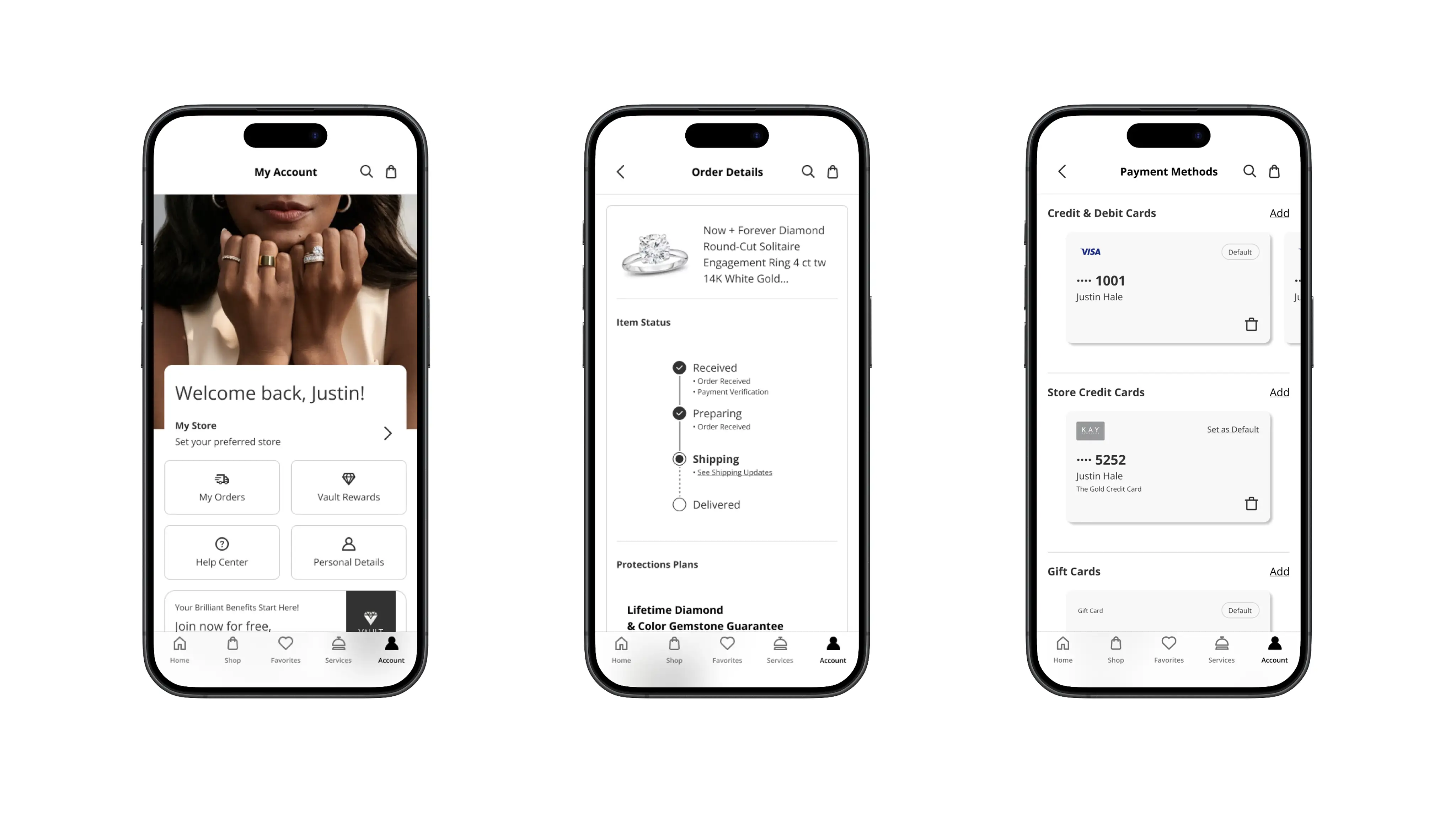
One Account, Everywhere
Account architecture was designed once and deployed across brands. Orders, payments, saved methods, and loyalty stayed familiar throughout the portfolio, creating one reliable identity layer while preserving brand expression.